
The world of finance has evolved from physical branches to mobile apps, and now, into “invisibility.” As of 2026, consumers no longer want to switch to a dedicated banking app; they expect to complete transactions within the flow of their daily lives—on platforms like WhatsApp, Uber, or Amazon. According to McKinsey, this market is projected to reach $7.2 trillion globally by 2030, making it a commercial imperative rather than just a trend.
What is Embedded Finance?
Embedded Finance is the integration of financial services—such as payments, lending, insurance, or investments—into non-financial platforms like retail, e-commerce, or logistics via API technology. In this model, businesses act as the “Interface Provider,” managing the customer experience, while a licensed “Service Bank” (BaaS) handles all regulatory and financial backend processes.
The Core Logic: How Does the System Work?
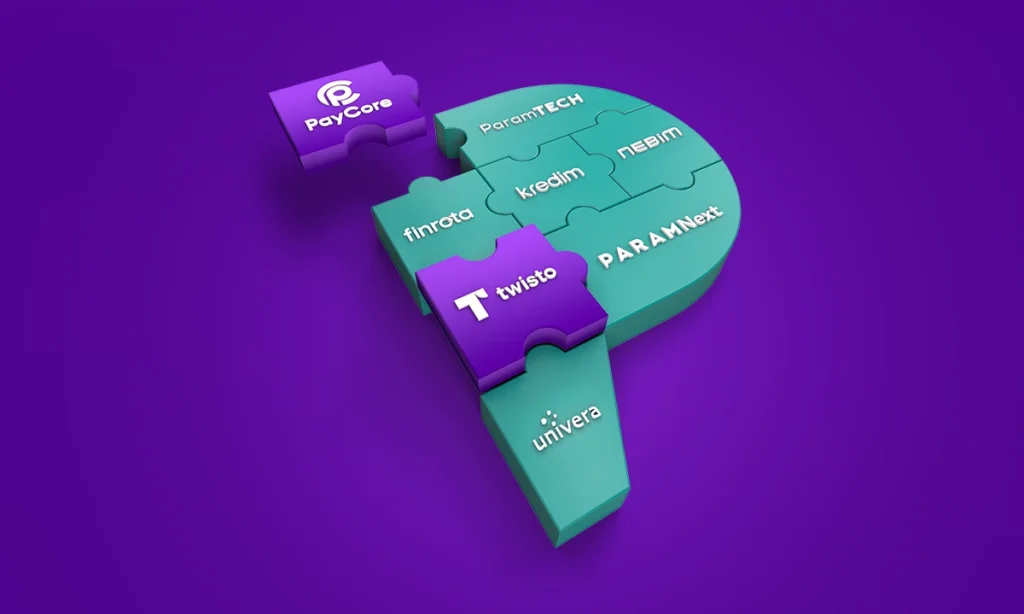
Embedded finance transforms complex banking infrastructure into modular “Lego pieces.” While traditional banking requires the customer to go to the bank, this model brings the bank directly to the customer’s point of need.
The ecosystem is built on three key pillars:
- Service Providers: Licensed banks or fintech companies (e.g., Param) that provide the underlying infrastructure and regulatory coverage.
- Platforms (Enablers / Interface Providers): Customer-facing brands like e-commerce sites or Super Apps that offer financial services as a value-added feature.
- Users: The end consumers performing the transaction.
BaaS vs. Embedded Finance: What’s the Difference?
It is essential to distinguish between these two frequently confused concepts:
- BaaS (Banking-as-a-Service): The “back kitchen” of banking. It is the technical process of exposing banking APIs to third parties (Technical Infrastructure).
- Embedded Finance: The “finished dish” served to the customer. It is the commercial application of those APIs within a product (Commercial Product).
“Embedded Finance represents the harmonious union of finance and technology. It allows fintech solutions to be woven into the fabric of daily life, from e-commerce to mobile ecosystems.”
Regulatory Landscape and Architecture in Türkiye (2026)
Türkiye stands as a global leader in early and comprehensive fintech regulation. When designing your business model, adherence to the “red lines” set by the BRSA (BDDK) and the CBRT (TCMB) is mandatory.
A) Banking-as-a-Service (BaaS) Regulation
Enacted on January 1, 2022, this regulation serves as the sector’s constitution, clearly defining operational roles.
- Chain of Responsibility: The Service Bank providing the infrastructure is jointly liable for any security breaches occurring at the Interface Provider (e.g., a marketplace). Consequently, banks apply rigorous “Due Diligence” when selecting partners.
- Title Restrictions: Interface Providers are strictly prohibited from using titles such as “Bank” or “Payment Institution” in their marketing. They must clearly state their status as an “Interface Provider.”
B) Capital Requirements in Insurance (2025 Update)
Barriers to entry have risen for platforms offering Embedded Insurance. Following the recent amendment to the Insurance Agents Regulation, the minimum capital for distance-selling agents has been increased to 4,000,000 TRY. Furthermore, companies must employ SEGEM-certified technical personnel even for purely digital sales.
Note: These regulations have effectively eliminated “unregulated” digital insurance, steering the sector toward institutional players. Ensure your model meets these capital thresholds.
Market Data and Critical Trends
Data confirms that the Turkish fintech ecosystem continues to outperform global trends despite economic headwinds.
- Record Investment: According to Startups.watch, Turkish fintech startups broke records in 2025 with a total of $219.7 Million in funding.
- Sector Dominance: Fintech and Gaming dominate 68% of all startup investments in Türkiye.
- Foreign Capital Inflow: Strategic moves, such as Dubai Islamic Bank’s investment in T.O.M. Group, serve as concrete evidence of the Istanbul Finance Center (IFM) effect.
Global Fintech Investment Snapshot (2025)
Global markets saw a rebound in fintech funding in 2025, breaking previous downward cycles.
- Total Investment: Approximately $53 Billion
- Growth: A 21% increase compared to 2024.
- Deal Volume: Spread across more than 5,900 deals.
- Leading Markets:
- 🇺🇸 USA: $25.1 Billion (Dominant market leader)
- 🇬🇧 UK: $3.6 Billion
- 🇮🇳 India: $3.4 Billion
- 🇦🇪 UAE: $2.5 Billion (Driven by Crypto/Blockchain hubs)
- 🇸🇬 Singapore: $2 Billion
Industry Use Cases
Embedded finance is not just a change in payment methods; it is a total redesign of the Customer Lifecycle. Here are the leading scenarios in the 2026 market:
1. Embedded Payments and Digital Wallets
Where payment evolves from a “step” to a “seamless experience.” Digital wallet infrastructures are now the standard for e-commerce.
- Invisible Payments: Similar to ride-sharing apps, payments are settled in the background without manual intervention. This frictionless model significantly reduces churn.
- Marketplace Wallets: Closed-loop systems that allow instant refunds to wallets, keeping capital within the ecosystem and improving corporate cash flow.
- Tokenization: Replacing raw card data with encrypted “tokens” to eliminate security risks and ensure PCI-DSS compliance.
2. Embedded Lending and B2B Financing
Moving credit access from bureaucratic bank processes to the Point of Need.
- BNPL (Buy Now, Pay Later): A critical vertical in high-inflation environments. Real-time AI scoring provides financial inclusion for the underbanked in milliseconds.
- Supply Chain Finance (B2B BNPL): A revolution for SMEs. Marketplaces provide instant working capital to sellers against future receivables, bypassing traditional collateral requirements.
3. Embedded Wealth and Micro-Savings
- Round-ups: Digitizing the habit of “keeping the change.” A $19.50 transaction is rounded to $20, with $0.50 automatically invested in gold or liquid funds.
- In-Platform Investing: Allowing users to earn overnight interest on their wallet balances via licensed brokerage integrations.
4. Embedded Insurance [NEW]
Insurance becomes a contextual add-on rather than a separate purchase.
- Contextual Offers: One-click Travel Cancellation during flight booking or Screen Protection during a smartphone purchase.
5. Mobility and In-Car Payments
Electric vehicle ecosystems (like Togg) are becoming “rolling wallets.” Drivers can pay for charging, tolls, or drive-thru orders directly via the vehicle’s dashboard.
6. Embedded Payroll and HR Tech
- Earned Wage Access (EWA): Employees can withdraw a portion of their earned salary before payday, significantly boosting financial wellness and employee retention.
Financial service models mentioned above are provided through partnerships with authorized institutions (Banks, EMIs, Brokerage Firms). Legal obligations vary by business model.
The Strategic Advantage
Embedded finance accelerates transactions, reduces operational costs, and eliminates the friction typical of traditional banking. By integrating these services, businesses can offer a superior customer experience that drives loyalty and opens new revenue streams.
- Evolution of Traditional Banking
- Deep Digital Integration
- Enhanced Security Standards
The Future of Your Business
The future belongs to a world where financial services are not a “separate business,” but a native component of every digital interaction.
Lead the Financial Transformation with Param
Turning your business into a fintech powerhouse doesn’t have to be complex. With Param’s licensed infrastructure and advanced API solutions, you can:
- Accelerate collections and cash flow,
- Launch your own branded loyalty cards,
- Deliver a secure, world-class payment experience.
Frequently Asked Questions (FAQ)
Can I collect deposits from customers on my e-commerce site?
No. Under Turkish banking laws, “Interface Providers” cannot directly collect deposits or accept funds. Funds must be held within accounts at licensed banks or payment institutions.
Is Embedded Finance secure?
Yes. Transactions are overseen by the BRSA (BDDK) and CBRT (TCMB). The platform is merely the storefront; your money is protected by licensed entities like Param.
Does using BNPL affect my credit score?
Yes. BNPL services typically report to the Credit Bureau (KKB). Timely payments can improve your score, while delays may negatively impact it.